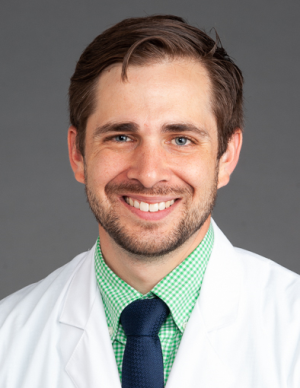
Nate Bowers, MD, PhD
Medical Resident
Dermatology
Specialty
Dermatologic Surgery,
General Dermatology
Patient Education Resources
Does the food I eat affect my acne?
There is some evidence to suggest that diet can play a role in the development of acne. Studies have found that a diet high in sugar and processed foods can increase the risk of developing acne. Diets...
There is some evidence to suggest that diet can play a role in the development of acne. Studies have found that a diet high in sugar and processed foods can increase the risk of developing acne. Diets...
How can a dermatologist make me appear more youthful?
A dermatologist can make you appear more youthful by using a variety of treatments, such as:Topical creams and serums that contain ingredients like retinoids and hyaluronic acid to improve skin textur...
A dermatologist can make you appear more youthful by using a variety of treatments, such as:Topical creams and serums that contain ingredients like retinoids and hyaluronic acid to improve skin textur...
How can I reduce the skin redness caused by rosacea?
There are several ways to reduce the skin redness caused by rosacea:Avoiding triggers: Triggers such as sun exposure, wind, high temperatures, stress, spicy foods, and alcohol, can worsen the symptoms...
There are several ways to reduce the skin redness caused by rosacea:Avoiding triggers: Triggers such as sun exposure, wind, high temperatures, stress, spicy foods, and alcohol, can worsen the symptoms...
What is the treatment for nail fungus?
Treatment for nail fungus (onychomycosis) can be challenging, as the fungus can be difficult to eliminate and may recur. Treatment options include:Topical antifungal medication: Over-the-counter antif...
Treatment for nail fungus (onychomycosis) can be challenging, as the fungus can be difficult to eliminate and may recur. Treatment options include:Topical antifungal medication: Over-the-counter antif...
What is the treatment for severe atopic dermatitis?
The treatment for severe atopic dermatitis will depend on the individual case, but it may include a combination of the following:Topical corticosteroids: Topical corticosteroids can be used to reduce ...
The treatment for severe atopic dermatitis will depend on the individual case, but it may include a combination of the following:Topical corticosteroids: Topical corticosteroids can be used to reduce ...
Education & Training
Medical Residency
- Internal Medicine, Wake Forest Baptist Medical Center, 2019
- Dermatology, Wake Forest Baptist Medical Center, 2022
Medical Education
- PhD, Univ of Alabama at Birmingham, 2014
- Medical Degree (MD), East Tennessee State University James H. Quillen College of Medicine, 2018
- BS, East Tennesse State University, 2009
Professional Affiliations

Wake Forest School of Medicine - Dermatology
The Department of Dermatology at Wake Forest School of Medicine strives to improve skin health in all patients; educate patients, students and residents about skin disease; and to improve skin health through research. As the region's leading dermatology department, we provide top-notch training for future practitioners of dermatology and a productive setting for basic and applied research on diseases of the skin.