Dr. Christian Anderson, MD
Physician
Dermatology
Provide Feedback
About Dr. Christian Anderson, MD
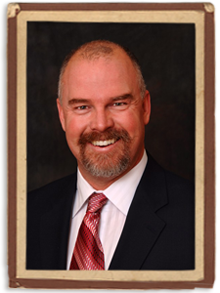
Dr. Anderson’s practice is dynamic, patient-focused, and serves as a teaching center for many students in Pre-Medicine, Physician Assistant, Doctor of Osteopathic Medicine, and Doctor of Medicine programs nationwide. His favorite hobby is spending time with his family; he is also an avid horseman and fisherman.
Dr. Anderson purchased Western Wyoming Dermatology from Dr. Kenneth Wegner in 2005 and has since enjoyed the addition of surgical dermatology services, three providers, and new state of the art facilities in Jackson, Pinedale, and Afton, Wyoming. Prior to this he attended Idaho State University and earned the degree Doctor of Pharmacy, then relocated to Yakima, Washington and served as Director of Consultant Services for long term care facilities in the greater Yakima area. He also held prescriptive authority from the State of Washington and worked as a Physician Extender for the Central Washington Mental Health Consortium. In addition, he was appointed to the State of Washington Drug Use and Review Advisory Board, which made policy recommendations to the Washington State Health Authority and Medicaid programs. He then attended Western University of Health Sciences where he earned his degree in medicine and completed his house officer appointment at Downey Regional Medical Center. Later, as chief resident, he completed the Midwestern University of Health Science’s residency in Dermatology, which had affiliations with prestigious teaching sites such as Loma Linda University and Mayo Clinic. While there, he also served as principal investigator for several National Institutes of Health Sanctioned Phase 2 and 3 Drug Studies. His articles and research appear in multiple publications. Afterward, he trained for one additional year in Mohs Micrographic Cancer Surgery and reconstructive techniques and became one of the first physicians in the nation to receive the Certificate of Added Qualification in Mohs Surgery by the American Osteopathic College and Board of Dermatology. He maintains licensure in Wyoming, Idaho, and Arizona. He is a Fellow of the American Osteopathic Association, the American Osteopathic College of Dermatology, and the American Society for Mohs Surgery. He is also an active associate member of the American Academy of Dermatology.
Dr. Anderson purchased Western Wyoming Dermatology from Dr. Kenneth Wegner in 2005 and has since enjoyed the addition of surgical dermatology services, three providers, and new state of the art facilities in Jackson, Pinedale, and Afton, Wyoming. Prior to this he attended Idaho State University and earned the degree Doctor of Pharmacy, then relocated to Yakima, Washington and served as Director of Consultant Services for long term care facilities in the greater Yakima area. He also held prescriptive authority from the State of Washington and worked as a Physician Extender for the Central Washington Mental Health Consortium. In addition, he was appointed to the State of Washington Drug Use and Review Advisory Board, which made policy recommendations to the Washington State Health Authority and Medicaid programs. He then attended Western University of Health Sciences where he earned his degree in medicine and completed his house officer appointment at Downey Regional Medical Center. Later, as chief resident, he completed the Midwestern University of Health Science’s residency in Dermatology, which had affiliations with prestigious teaching sites such as Loma Linda University and Mayo Clinic. While there, he also served as principal investigator for several National Institutes of Health Sanctioned Phase 2 and 3 Drug Studies. His articles and research appear in multiple publications. Afterward, he trained for one additional year in Mohs Micrographic Cancer Surgery and reconstructive techniques and became one of the first physicians in the nation to receive the Certificate of Added Qualification in Mohs Surgery by the American Osteopathic College and Board of Dermatology. He maintains licensure in Wyoming, Idaho, and Arizona. He is a Fellow of the American Osteopathic Association, the American Osteopathic College of Dermatology, and the American Society for Mohs Surgery. He is also an active associate member of the American Academy of Dermatology.
Patient Education Resources
Does Coolsculpting® really work?
CoolSculpting® is a non-surgical, non-invasive procedure that uses a device to cool targeted areas of fat, causing the fat cells to freeze and die. Over time, the body naturally eliminates these d...
CoolSculpting® is a non-surgical, non-invasive procedure that uses a device to cool targeted areas of fat, causing the fat cells to freeze and die. Over time, the body naturally eliminates these d...
Eczema Medication Savings & Support Programs
Click on the product image below to access medication savings or patient support programs from the manufacturer. In some cases, a form must be submitted along with proof of having purchased the med...
Click on the product image below to access medication savings or patient support programs from the manufacturer. In some cases, a form must be submitted along with proof of having purchased the med...
How can a dermatologist make me appear more youthful?
A dermatologist can make you appear more youthful by using a variety of treatments, such as:Topical creams and serums that contain ingredients like retinoids and hyaluronic acid to improve skin textur...
A dermatologist can make you appear more youthful by using a variety of treatments, such as:Topical creams and serums that contain ingredients like retinoids and hyaluronic acid to improve skin textur...
Psoriasis Medication Savings & Support
Click on the product image to access medication savings or support services offered by the manufacturer In most cases, this form must be submitted along with proof of having purchased the medi...
Click on the product image to access medication savings or support services offered by the manufacturer In most cases, this form must be submitted along with proof of having purchased the medi...
What are some basic acne skin care tips?
Here are some basic acne skin care tips that may help to reduce the appearance and severity of acne:Cleanse your skin gently: Use a mild, non-abrasive cleanser to wash your face twice a day. Avoid usi...
Here are some basic acne skin care tips that may help to reduce the appearance and severity of acne:Cleanse your skin gently: Use a mild, non-abrasive cleanser to wash your face twice a day. Avoid usi...