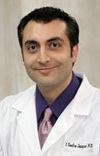
Medical Expertise of Dr. S. Jazayeri, MD
About Dr. S. Jazayeri, MD
Dr Jazayeri earned his undergraduate degree in biology from the University of California, San Diego in 1994, and his M.D. degree from St Georges University School of Medicine in 1999. He finished a residency in family medicine, in 2002, at the University of Medicine and Dentistry of New Jersey before completing his Dermatology Fellowship training at Advanced Dermatology Center in San Diego, California, and subsequently in Phoenix, Arizona in 2005. Since then, Dr Jazayeri has been practicing at Alliance Dermatology, where he practices general and cosmetic dermatology, with emphasis on skin cancer detection and surgeries using Mohs technique.
Dr Jazayeri has maintained a very active professional life, dividing up his time between private practice, conducting research studies, volunteer work, attending specialty meetings and teaching. He has been the Principal Investigator in several notable national research studies including psoriasis, dermatitis, and acne. The American Academy of Dermatology has recognized Dr Jazayeri for his contributions as a physician participant in the free Melanoma and Skin Cancer Screening Programs, in 2004 and 2005. Dr Jazayeri has also volunteered his expertise with the Red Cross in Guadalajara, Mexico, where he treated patients in need. In the past, he also has had a newspaper interview and a television appearance on CBS Evening News to educate the general public on the danger and risk of sun exposure.
Dr Jazayeri is currently the clinical instructor and lecturer at the National Laser Institute and co-clinical director at the Physicians Skin Institute in Scottsdale, AZ.
Patient Education Resources
CoolSculpting® is a non-surgical, non-invasive procedure that uses a device to cool targeted areas of fat, causing the fat cells to freeze and die. Over time, the body naturally eliminates these d...
Click on the product image below to access medication savings or patient support programs from the manufacturer. In some cases, a form must be submitted along with proof of having purchased the med...
Atopic dermatitis and eczema are often used interchangeably, but they are not exactly the same thing. Atopic dermatitis is a type of eczema.Eczema is a general term that refers to a group of condition...
Dry skin can be caused by a variety of factors, such as cold weather, low humidity, harsh soaps, and certain medical conditions. Here are some tips for treating dry skin:Moisturize: Moisturizing is th...
Actinic keratoses (AKs) are precancerous skin lesions that can develop into squamous cell carcinoma, a type of skin cancer. Treatment options for AKs include:Cryotherapy: This procedure involves freez...
Alliance Dermatology
