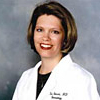
Medical Expertise of Dr. Tara Stewart, MD
Diagnosis and treatment of skin conditions, including acne, eczema, rosacea, psoriasis and skin cancer.
About Dr. Tara Stewart, MD
Dr. Tara Stewart is a board-certified dermatologist practicing general medical and surgical dermatology at Alamance Skin Center since 2001. Her training includes B.S. in microbiology from Brigham Young University. She received her medical degree from the University of Utah School of Medicine in 1997, and completed a transitional internship at LDS Hospital in Salt Lake City, Utah in 1998. Her dermatology specialty training was completed in 2001 at the University of North Carolina at Chapel Hill. She is a
Patient Education Resources
Can I switch the biologic medications I’m using to treat my psoriasis?
Yes, you can switch biologic medications for psoriasis if one is not working effectively. Biologic medications are a class of drugs that target specific parts of the immune system that are involved in...
Yes, you can switch biologic medications for psoriasis if one is not working effectively. Biologic medications are a class of drugs that target specific parts of the immune system that are involved in...
How do biologics work to treat my psoriasis?
Biologics are a class of medications that are used to treat moderate to severe psoriasis. They are typically used when other treatments, such as topical creams and light therapy, have not been effecti...
Biologics are a class of medications that are used to treat moderate to severe psoriasis. They are typically used when other treatments, such as topical creams and light therapy, have not been effecti...
What are the possible treatments for my actinic keratoses?
Actinic keratoses (AKs) are precancerous skin lesions that can develop into squamous cell carcinoma, a type of skin cancer. Treatment options for AKs include:Cryotherapy: This procedure involves freez...
Actinic keratoses (AKs) are precancerous skin lesions that can develop into squamous cell carcinoma, a type of skin cancer. Treatment options for AKs include:Cryotherapy: This procedure involves freez...
What is microneedling?
Microneedling is a cosmetic procedure that involves using a device with fine needles to create tiny punctures in the skin. The needles are typically between 0.5mm and 2.5mm in length, and are used to ...
Microneedling is a cosmetic procedure that involves using a device with fine needles to create tiny punctures in the skin. The needles are typically between 0.5mm and 2.5mm in length, and are used to ...
What is the treatment for severe atopic dermatitis?
The treatment for severe atopic dermatitis will depend on the individual case, but it may include a combination of the following:Topical corticosteroids: Topical corticosteroids can be used to reduce ...
The treatment for severe atopic dermatitis will depend on the individual case, but it may include a combination of the following:Topical corticosteroids: Topical corticosteroids can be used to reduce ...